

Supporting the science: Living Ocean and Adrift Lab’s long-term seabird research
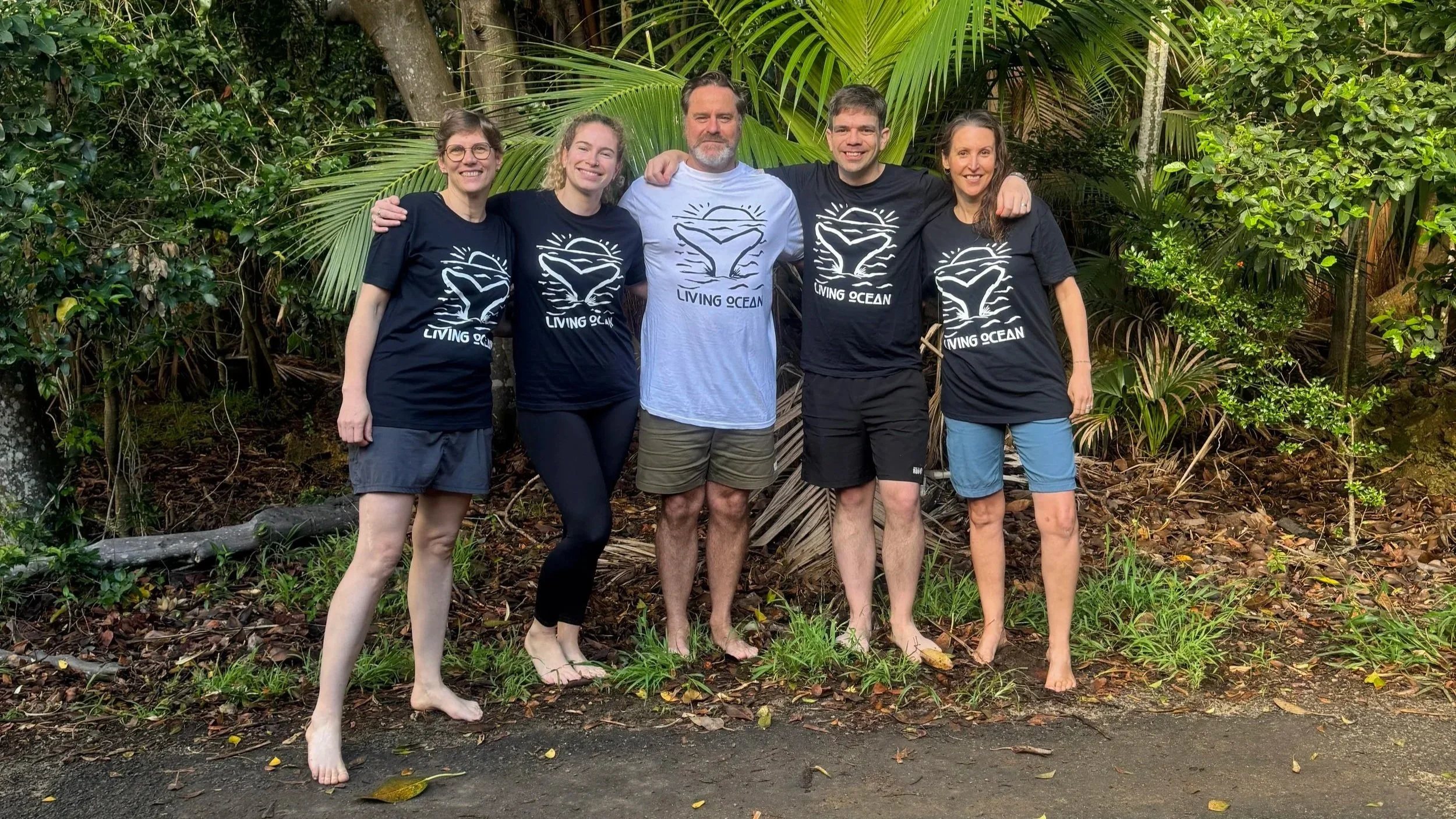
The Adrift Lab team in-field on Lord Howe Island with Senator Whish-Wilson
A new peer-reviewed scientific publication from Adrift Lab has provided important new evidence about the relationship between plastic ingestion and the survival of seabirds.
For Living Ocean, the publication also represents something broader: the value of supporting rigorous scientific research over the long term.
Living Ocean has supported Adrift Lab’s research program on Lord Howe Island through funding and practical field assistance. We are pleased to be acknowledged as a contributor to this latest publication and, more importantly, to have played a supporting role in research that is improving understanding of how plastic pollution affects marine life.
New research built on long-term evidence
Published in the Proceedings of the National Academy of Sciences, the new study examines the relationship between plastic ingestion and the probability that young Sable Shearwaters (Ardenna carneipes) survive and later return to their breeding colony on Lord Howe Island.
The research draws on 15 years of data.
Its findings indicate that greater quantities of ingested plastic are associated with a reduced probability of young birds surviving to return and recruit into the breeding population.
That connection is important because establishing the longer-term consequences of plastic ingestion in wild animals is scientifically difficult. Following what happens to individual animals over multiple years requires consistent research, reliable data and repeated fieldwork.
The new publication demonstrates what a long-term dataset can make possible.
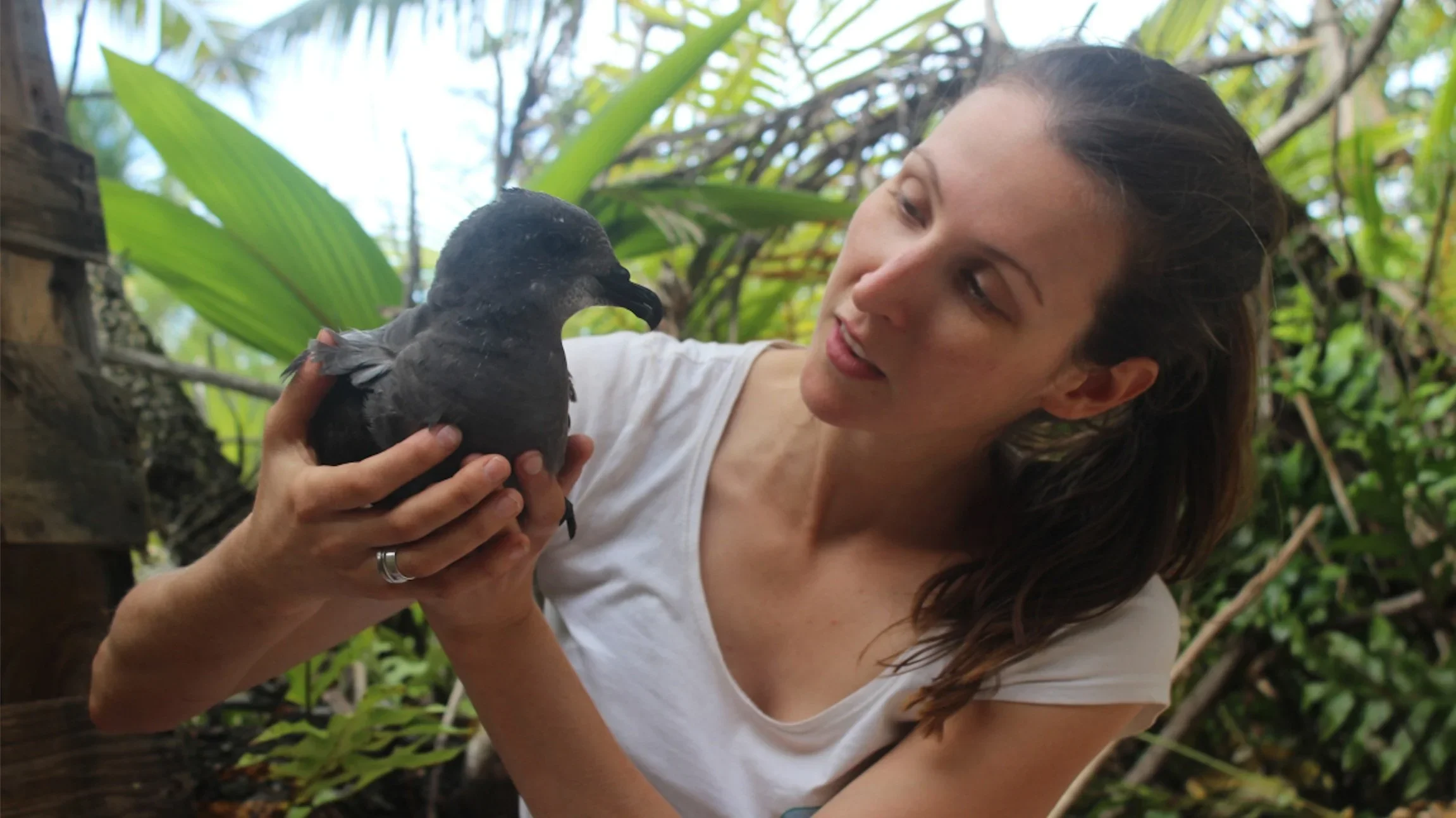
Dr Lavers with a Sable Shearwater
Why Living Ocean supports this research
Living Ocean’s research model is based on collaboration.
We work with scientists and specialist research organisations where our resources, volunteers and community can make a useful contribution to well-designed research.
Our relationship with Adrift Lab is an example of that approach.
On Lord Howe Island, Adrift Lab conducts specialist research into seabirds and the effects of plastic ingestion. Living Ocean has supported this work financially and through practical participation in field research.
This allows Living Ocean to contribute to research with scientific expertise and continuity that would be difficult for a community-based organisation to replicate independently.
It also provides our supporters and volunteers with a direct connection to credible marine research.
The value of sustained research
Scientific progress does not always happen quickly.
Some questions can be investigated within a single research project. Others require observations accumulated over many years before meaningful patterns become visible.
Long-lived and highly mobile marine species present a particular challenge. Researchers may need to collect information during one stage of an animal’s life and then wait years before they can determine what happened subsequently.
That makes continuity important.
Research programs need scientific expertise, but they also need equipment, logistics, field assistance and funding. Organisations such as Living Ocean can help provide some of that supporting infrastructure while specialist researchers remain responsible for the science itself.
This collaborative model is central to how Living Ocean approaches marine research.
From research to understanding
Living Ocean’s purpose includes facilitating research into the marine environment and helping our community better understand human impacts on ocean health.
Supporting research is therefore not simply about funding an individual project.
It is about helping build the evidence base required to understand what is occurring in marine ecosystems.
Adrift Lab’s latest publication adds an important piece to that evidence.
The research should also be understood within its appropriate scientific boundaries. Plastic pollution is one of multiple pressures experienced by seabirds, and this study does not suggest that plastic alone determines the future of a population.
What it does provide is new evidence connecting the amount of plastic ingested by young seabirds with their subsequent probability of survival and recruitment.
That is an important development in understanding the consequences of plastic pollution.
Continuing the partnership
Living Ocean is proud to have supported Adrift Lab and to be acknowledged in this latest scientific publication.
We intend to continue supporting credible research partnerships that expand scientific and community understanding of our marine environment.
We also encourage our community to go directly to the researchers behind this work.
Scientific research is necessarily a collective endeavour. Living Ocean’s role is to help credible research happen and to connect our community with the knowledge that research produces.