


Seabirds as Sentinels of Ocean Health
Overview

Living Ocean supports an annual study of migrating shearwaters on Lord Howe Island, led by the research group Adrift Lab, which is largely based in Tasmania.
Shearwaters born on Lord Howe Island migrate to the Sea of Japan and Bering Sea. Young birds spend an incredible five years continuously at-sea, exploring the vast oceans and learning how to catch food and navigate. After this extended period, they fly thousands of kilometres south, returning home to Lord Howe Island, often within metres of the same burrow in which they were raised.
Once fully grown, adult shearwaters will forage for their chicks in the Tasman Sea, primarily in the deep waters off Sydney and Wollongong. Here they collect floating plastic items which can look and smell like prey after decades in the ocean, tricking the birds into thinking it is food. The adults then return to the island with bellies full of plastic, and feed this to their offspring.
What happens to young birds that are fed plastic has been the focus of Adrift Lab's research over the past decade, and many of the discoveries they've made are both groundbreaking and tragic. In just the past few years, the Adrift Lab team have shown how the ingestion of plastic by seabirds contributes to serious health conditions, including inflammation and scar tissue formation in the lining of the stomach (a disease the team named plasticosis), organ failure (including kidney and liver disease), and neurodegenerative conditions like Alzheimer's.
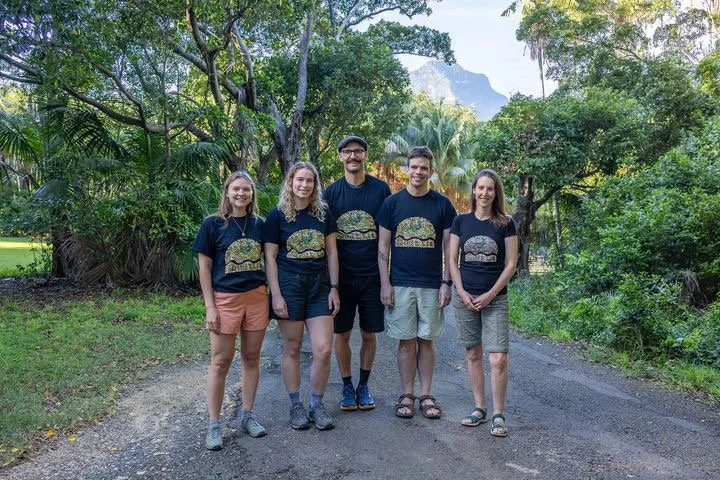
While these results can be heartbreaking for the team and broader community, this world-first research has transformed our understanding of so-called "sublethal effects" - negative health consequences that don't immediately result in death, but can cause long-term pain and suffering. Many of these sublethal effects are difficult to describe and quantify because they occur in animals that are still alive, yet this research has shown we cannot underestimate the substantial harm that is taking place at a cellular level. Essentially, out of sight, but thanks to Adrift Lab, no longer out of mind.
-
Our aim is to further this critical research into the health impacts of ingested plastics on marine species.
-
In Australia, around 90% of Flesh-footed Shearwater adults and chicks contain plastic (Lavers & Bond 2016). In 2011, one chick was found to have more than 275 pieces of plastic in it’s stomach (equivalent to an average human ingesting 10kg of plastic; (Lavers et al. 2014). Recent data (see Publications) indicate this species is one of the world's most heavily contaminated seabirds and chicks that ingest large amounts of plastic have poor body condition and likely suffer reduced juvenile survival. Not surprisingly, Flesh-footed Shearwater populations on Lord Howe Island and in New Zealand have declined significantly over the past few decades.
Pollution of the environment with plastic debris is a significant and rapidly expanding threat to biodiversity due to its abundance, durability, and persistence. Current knowledge of the negative effects of debris on wildlife is largely based on consequences that are readily observed, such as entanglement or starvation. Many interactions with debris, however, result in less visible and poorly documented sublethal effects, and as a consequence, the true impact of plastic is underestimated.
Adrift Lab investigated the sublethal effects of ingested plastic in Flesh-footed Shearwaters (Ardenna carneipes) using blood chemistry parameters as a measure of bird health. The presence of plastic had a significant negative effect on bird morphometrics and blood calcium levels and a positive relationship with the concentration of uric acid, cholesterol, and amylase. That Adrift Lab found blood chemistry parameters being related to plastic pollution is one of the few examples to date of the sublethal effects of marine debris and highlights that superficially healthy individuals may still experience the negative consequences of ingesting plastic debris. Moving beyond crude measures, such as reduced body mass, to physiological parameters will provide much needed insight into the nuanced and less visible effects of plastic.
-
Financial support for Adrift Lab
On-site volunteer support on Lord Howe Island:
Collecting dead and dying juvenile shearwaters
Capturing healthy birds at night for gut plastic assessment, blood sampling, banding and release
Participating in lab work and cooking for exhausted scientists
-
Our financial support for blood analysis and support on-site enabled publication by Adrift Lab of the world’s first scientific paper on the health effects of plastic ingestion on any animal.
-
Adrift Lab
School of Medicine, University of Tasmania
-
Dr Jennifer Lavers, Adrift Lab
Dr Alex Bond, Natural History Museum, London
Dr Jack Auty, School of Medicine, University of Tasmania
