

Humane shark management with Lawrence Chlebeck from Humane World for Animals
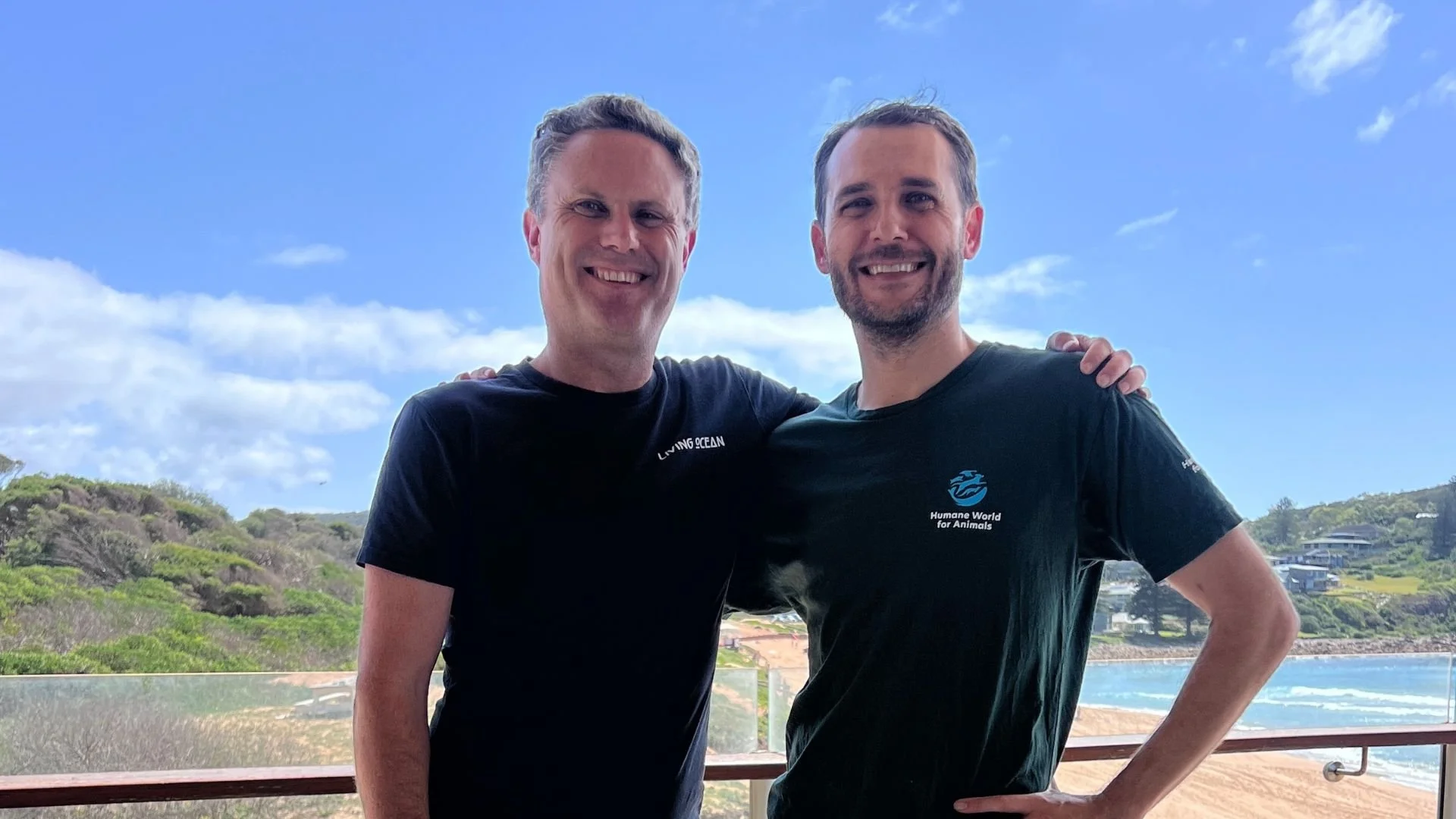
Tom Peacock from Living Ocean meets with Lawrence Chlebeck from Humane World for Animals to discuss shark safety, shark behaviour, and the importance of protecting these incredible animals while staying safe in the water.
We recently headed to Avalon Beach to chat with Lawrence Chlebeck, Marine Program Manager and Marine Biologist from Humane World for Animals, about the recent shark bites along the Sydney coastline. Living Ocean’s Tom Peacock got Lawrence’s expert insight into what’s behind these incidents and what we can do to stay safer.
Key factors behind shark activity
Shark activity depends on several environmental factors:
Heavy rainfall and runoff: Stormwater brings small fish into nearshore areas, attracting sharks.
Summer water temperatures: Bull sharks are more likely to frequent warmer waters.
Time of day and ocean currents: Sharks’ natural patterns influence when and where they’re active.
Nets: Not a barrier, a culling device
Lawrence emphasised that traditional shark nets provide a false sense of security. As he put it, they’re like “ping pong nets on a football field” - small, limited, and not actual barriers.
Nets are about 150 metres in length, only 6 metres high, and placed in 10-12 metres of water. Sharks can easily swim around or underneath them.
They have been operating for nearly 100 years and function as a culling program rather than a safety measure.
Nets also entangle marine life, including dolphins, turtles, and other sharks, potentially increasing risk near beaches.
Culling sharks isn’t the solution
Calls for commercial or local shark culls are ineffective and harmful:
Bull sharks are highly migratory; removing local sharks won’t reduce risk because new sharks will quickly fill those territories.
Methods like baited drum lines or culling nets can attract sharks closer to shore, triggering feeding behaviour.
Existing shark nets already act as a form of culling, yet incidents still occur, showing that this approach does not improve human safety.
Humane shark management recognises that lasting safety comes from progress, not extremes. By investing in smarter technologies, public education, and evidence-based approaches, we can reduce risk today while moving toward a future where both human and animal lives are protected.
Government measures
The NSW Government is investing $4.2 million in modern, non-lethal shark mitigation measures:
Drone surveillance – covering 30 more beaches.
Smart drum lines and listening stations – far more effective than traditional shark nets.
These measures, combined with education, are the most effective way to reduce risk.
What you can do
Public awareness and education remain the most effective tools:
Avoid swimming or surfing after heavy rain or in murky water.
Use swimming enclosures in harbours during summer.
Avoid swimming or surfing at dawn, dusk, or night.
Always swim or surf witha buddy.
Surfers can consider scientifically tested personal shark deterrents.
Lawrence also suggests a simple flag system at beaches to indicate shark risk:
Green: low risk
Orange: medium risk
Red: high risk
This allows swimmers and surfers to make informed choices immediately.
Staying safe is about awareness, education, and respecting the ocean - not fear.